Skip to the content

Education & Training

We are dedicated to supporting current and future Indigenous health professionals in their educational and professional development. Through our programs and partnership with tribes, we strive to provide the tools to strengthen Indigenous communities from the inside out.


Our faculty partner with experts in Indigenous health from around the U.S. and internationally to provide exemplary educational opportunities through the Johns Hopkins Bloomberg School of Public Health and at community-based locations.

Programs and components

Scholar Spotlight

Brooke Betsuie,

Navajo Nation. Summer Institute Scholar

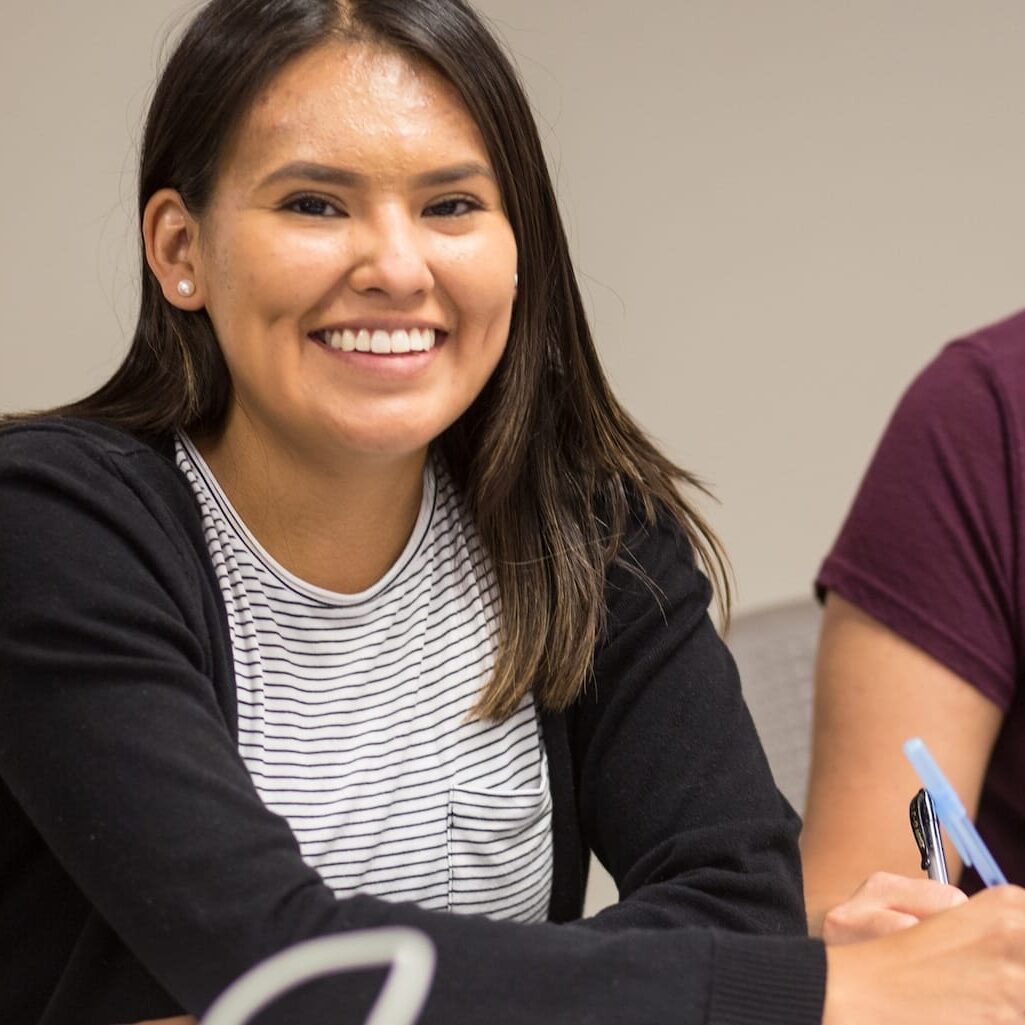
The Johns Hopkins Winter Institute has been a beautiful and inspiring experience, teaching me to understand the value of Indigenous culture within the public health field. This program allowed me to leverage my cultural teachings and beliefs in order to build resilience and lasting public health programs for Indigenous communities. The faculty and staff were very supportive throughout the session and the amount of encouragement from the organization was especially admirable. I enjoyed the amount of Indigenous faculty who shared their stories and experiences as well as provide a pathway for Indigenous students to succeed in higher education. The institute was an incredible experience and the students and faculty made the program very unique compared to other courses focused on public health. I would recommend this institute to Indigenous students focused on gaining professional degrees as well as seeking opportunities that are culturally relevant within public health.

Browse All Courses

Found 13 Results

Indigenous Harm Reduction

Course Number: 224.631 Credits: 2 Schedule: July 22-26, 2024, 3:00pm-6:30pm ET

This course explores the roots of addiction in Indigenous communities, and the strengths-based approaches that support positive change and honor community-based approaches to addressing the issue of increased substance use and overdose in Indigenous communities. In this course, you will have the opportunity to hear from Indigenous leaders in this field, including frontline workers, people with lived/living experience, youth, Elders and academics. Learning objectives include: Evaluate perspectives on addiction and how they apply to Indigenous experiences; Articulate the impacts of colonization on addiction, increased substance use and overdose in Indigenous communities; Examine system of prohibition and it’s role in creating increased risk of overdose; Explore Indigenous harm reduction perspectives, approaches and programming.

Academic Level(s): Academic Level Example

Indigenous Perspectives on Environmental Health (Hybrid)

Course Number: 224.612 Credits: 2 Schedule: June 9-11, 2025, 9am-5pm ET

Examines real-world examples and approaches to environmental health issues in Indigenous communities and presents challenges for implementing Indigenous-centered approaches to address current issues. Discusses the role and influence of Tribal and federal policy on Indigenous environmental challenges. Identifies appropriate frameworks and approaches used by Indigenous communities to address environmental challenges. Analyzes the current understanding of the relationship between the environment and Indigenous health approaches. Applies Indigenous-based frameworks from this course to address environmental health challenges facing Indigenous communities.

Using Mass Media for Health Promotion in American Indian Communities *Not currently offered

Credits: 2

Media specialists from the Johns Hopkins Center for American Indian Health have designed this course to train students in developing a mass media campaign directed at health promotion within tribal communities. During the course, students will be introduced to the basics of how to develop a media campaign, including community needs assessment, developing “change targets” for messages, analysis of best media outlets for high exposure and cost containment within AI/AN communities, the ABCs of media production, and using social media. Students will acquire skills to target media campaigns to address identified health needs, understand elements of successful Public Service Announcements (PSAs) across various media types, and gain techniques and skills to produce radio and digital PSAs to educate the public on the area of health concern identified in the needs assessment.

Prevention of Unintentional Injuries in American Indian Communities

Course Number: 221.664 Credits: 2 Schedule: January 16-19, 2024 (Tuesday-Friday), 12-5pm ET

Injuries are the leading cause of death for American Indians ages 1-44 and the third leading cause of death overall. This 5-day day learning opportunity will explore the unique injury patterns experienced by American Indian communities and teach students how to design, implement and evaluate injury prevention initiatives in their community. Throughout the course, students will work to develop basic knowledge and skills relating to all core competencies of injury prevention. Although some competencies will be addressed in greater detail than others, students will be given as many opportunities as possible, within the constraints of the 5-day training, to practice these skills. Practical application sessions will provide hands-on, facilitated, skills-development experience.

Introduction to American Indian Health Research Ethics (Online)

Course Number: 221.666 Credits: 2 Schedule: June 23-27, 2025, 1-5pm ET

The objective of this course is to increase participants’ awareness of and ability to reason through ethical issues that arise relating to human subjects research in American Indian communities. This course explores the unique ethical principles and regulatory requirements related to conducting research in Indian communities. Special attention is given to historical and cultural considerations pertaining to health research within tribal nations.

Early Childhood Research in Tribal Communities (Online)

Course Number: 221.665 Credits: 2 Schedule: July 21-25, 2025, 1-5pm ET

American Indian and Alaska Native (AIAN) communities possess tremendous cultural strengths and supports to promote positive parenting and optimal early child development. At the same time, many AIAN communities grapple with historical trauma and related modern economic, health, and social disparities that can place young children’s development at risk. AIAN and affiliated scholars seek knowledge about early childhood developmental processes, program and service strategies and best practices, and appropriate research and evaluation approaches to measure developmental influences and document early childhood program impacts.

This course will provide: 1) Provide foundational knowledge from Indigenous and western perspectives about why early childhood is a key developmental growth period; 2) Provide information on how appropriate research approaches can be leveraged to support early childhood efforts; and, 3) Examine unique aspects of AIAN research, culture and values that inform our understanding of early childhood development.

Community Based Participatory Research with Indigenous Peoples *Not currently offered

Credits: 2

Community based participatory research (CBPR) is a partnership approach to research that equitably involves academic researchers and community members in all steps of the research process, with all partners contributing their expertise. This course will focus on a research approach that facilitates the movement of Indigenous knowledge from the margins of research to the center. Students will gain knowledge in CBPR approaches and methods applying perspectives unique to Indigenous communities, where research is conducted by drawing on community strengths, advocating for change, and building trust, equity, and community control.

Collecting, Analyzing, and Using Public Health Data in American Indian Communities (Online)

Course Number: 221.670 Credits: 3

An introduction for persons who might not have had previous formal training in epidemiology or biostatistics, but might be working to determine or to address tribal priorities for health care, or working/interested in, clinical research or public health within tribal communities. This course prepares students for the core epidemiology and biostatistics courses offered by the School of Public Health. Course participants will learn how to collect, analyze and use community data to address public health problems. Participants are asked to work on datasets from tribal communities to apply the principles taught.

American Indian Health Policy

Credits: 2

The purpose of the American Indian Health Policy course is to (1) introduce students to the concepts and tools used in health policy, (2) examine health issues facing American Indian/Alaska Native (AI/AN) communities, and (3) practice the application of rational decision making models to analyze various policy alternatives to address health concerns in Native communities. Special consideration is given to the historical relationship between Tribes and the U.S. federal government that underlies the delivery of health services to AI/ANs. The course focuses on introducing the skills necessary for students to be an effective policy analyst/policy advocate.

Mental Health in American Indian Communities (Online)

Course Number: 221.673 Credits: 2 Schedule: January 13-17, 2025 (Monday – Friday), 12:00PM – 4:00PM ET

This course focuses on the status, needs, availability, and outcomes for mental health treatment and services to American Indians and Alaska Natives. Ways to improve services currently available and the need to promote wellness are among key issues stressed. The learning objectives of the course include: 1) to examine the complexities of mental health care for the American Indian and Alaska Native communities; 2) to identify high-need populations and assess the availability and quality of services available for those populations; and 3) to gain information on ways to help prevent mental illness and promote wellness among the communities studied.

An Interdisciplinary Approach to Understanding the Health of American Indians (Online)

Course Number: 221.667 Credits: 3 Schedule: January 6-10, 2025 (Monday-Friday), 11:00AM – 3:30pm ET

An interdisciplinary approach is taken to understand different aspects of Indigenous health. The course will explore health and illness perceptions of Native American communities, and will consider approaches that are grounded in Traditional and Contemporary Indigenous Knowledge and supported by Western Research Methodology. Course participants will analyze key health issues from the perspective of Native communities, and through the lens of various public health disciplines such as epidemiology, mental health, environmental health, policy, and sociology. The over-arching emphasis of the course will be on serving Indigenous populations and empowering community-driven, culturally sensitive public health interventions.

Introduction to Data Management Using American Indian Health Data

Course Number: 221.672 Credits: 2 Schedule: July 8-12, 2024, 11:00am-2:30pm ET

This is an introductory level course for students interested in the fundamental tools of public health research. This course focuses specifically on the principles of data management, including: development of data flow diagrams; development of data collection forms, data dictionaries, and related documentation; fundamentals of database design; methods of data capture; data validation and methods of quality assurance; and principles of data security. Students will work with American Indian Health data sets to apply skills learned throughout the course.

Introduction to Quantitative and Qualitative Research for American Indian Health

Course Number: 221.671 Credits: 2 Schedule: July 8-12, 2024, 3:00-6:30pm ET

The overarching goal of the course is to provide a basic overview of qualitative and quantitative research methods and the different applications of each to a variety of different public health interventions. Readings, lectures and labs explore different research methods and the process of selecting the appropriate method to design and implement a variety of public health interventions. Topics covered in the course include: focus groups, in-depth interviews, comparison designs, intervention designs, and randomized controlled trials. Students will work to gain a basic understanding of these research methods and apply them to existing projects on which they are working.

4000+

Indigenous scholars trained

47

Indigenous faculty

14

Institute courses offered

1880+

Graduate scholarships awarded

Upcoming Training Events

July 1, 2026
Test title here
February 3, 2026
Lorem ipsum dolor sit amet, consectetur adipiscing elit.
October 31, 2025
Title goes here. Lorem ipsum doler.
Privacy Overview

This website uses cookies so that we can provide you with the best user experience possible. Cookie information is stored in your browser and performs functions such as recognising you when you return to our website and helping our team to understand which sections of the website you find most interesting and useful.