The Elders in Residence (EIR) Program, launched in January 2025, was created to ensure that Indigenous spirituality, cultural teachings, and relational accountability are embedded at the heart of research, practice, education, and training across the Center. Rather than positioning Elders as occasional speakers, the program intentionally honors Elders as cultural anchors and trusted guides whose teachings shape how learning, mentorship, and service are practiced. In doing so, our “Elder in Residence” model centers community relationships as the defining principle for guiding our Center’s hubs toward collective well-being through community engagement and progressing Indigenous solutions for healing and thriving.
Across the Center’s five regional hubs, Elders are supporting students, staff, and faculty through prayer, storytelling, ceremony, mentorship, and lived experience. Their presence grounds public health education in Indigenous worldviews and responsibilities to community, reinforcing the understanding that health, education, and leadership are inseparable from spiritual and cultural continuity.

Meet Our Elders
In the Baltimore Hub, Elder Ron Lessard (Mohawk) brings decades of experience in Indigenous education, federal service, and spiritual leadership. His engagement supports students and staff through prayer, reflection, and participation in Center activities, strengthening a sense of belonging and continuity within an urban academic setting.
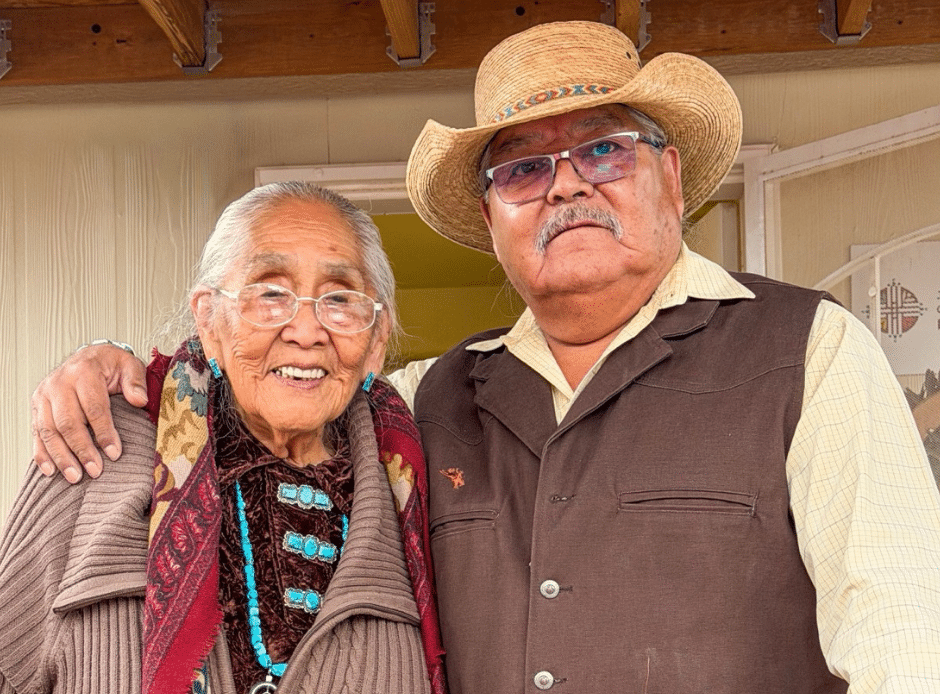
In the Southwest Hubs, which include Navajo Nation and White Mountain Apache communities, Elder engagement emphasizes deep community connection and respect for regional and cultural diversity. Mitzie Begay (Navajo), a retired health care worker based in Window Rock, Arizona, and Harrison Jim (Navajo), a traditional practitioner and cultural teacher—two of the eight Elders for the Navajo Nation—offer guidance grounded in ceremony, language, stories, and relational accountability. In this region, the process of inviting Elders has been shaped by broad community input, ensuring that relationships are rooted in trust rather than timelines. Within the White Mountain Apache Hub, the initial focus has centered on foundational planning and intentional relationship-building with Elders, laying the groundwork for future engagement.
Reflections on year one of the Elder In Residence Program
One of the most important lessons from the program’s first year has been that allowing relationships to lead results in deeper trust, clearer roles, and more authentic engagement. While this approach requires patience, it reflects Indigenous ways of working and honors the responsibility that comes with Elder guidance.
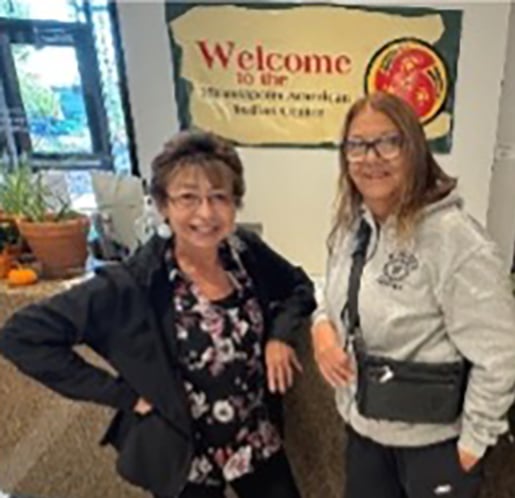
This relational approach is also evident in the Great Lakes Hub, which has moved most quickly toward deeper integration by building on an existing Elder-in-Residence model. Elders Dee Gokee-Rindal (Bois Forte Band of Ojibwe in northeastern Minnesota and Ojibways of Onigaming First Nation) and Pam Hughes (Red Cliff, an Ojibwe reservation in northern Wisconsin, located on Lake Superior) are actively mentoring fellows, guiding leadership development, and shaping program activities through cultural teaching and spiritual guidance. Their involvement has helped situate research, education, and leadership development within broader responsibilities to the community and care.
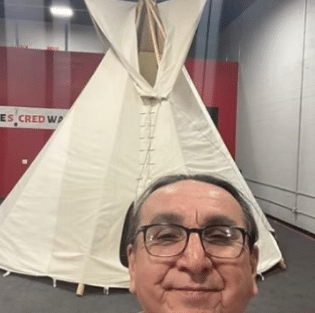
In the Great Plains Hub, Elder Gene Tyon (Oglala Lakota) has provided guidance during an initial phase focused on listening, reflection, and trust-building. This intentional approach recognizes that integrating Elders into academic environments represents not only a programmatic shift, but also a cultural and spiritual commitment. By prioritizing relationship over immediacy, the Hub has established a strong foundation for meaningful and sustained engagement.
Deepening relationships and expanding opportunities for our Elders
Supporting Elders well requires more than invitation. It requires attentiveness to ceremony, honoraria, time, and relational care, as well as institutional willingness to recognize spiritual knowledge as essential to learning and leadership. The Elders in Residence Program includes dedicated Elder liaison roles, cross-hub learning sessions, and Center-wide coordination, while still allowing each hub to adapt the program to its cultural and community context. This work is guided in close partnership with Dr. Faye McMillan, Education and Training Director, whose leadership has helped ensure that spirituality, ceremony, and Indigenous knowledge systems are present not at the margins, but at the center of education and training.
As the Elders in Residence Program enters its second year, the focus will shift from launch to deepening engagement. Plans include expanding opportunities for Elders to serve as teachers and mentors across courses and Institutes, additional onboarding where appropriate, and a Center-wide virtual gathering to bring Elders together across geographies for shared reflection and collective visioning.
At its heart, the Elders in Residence Program affirms that effective education and lasting impact emerge from alignment between knowledge, spirit, culture, and relationship. By honoring Elders as teachers and guides, the Center is strengthening Indigenous-led, spiritually grounded public health education for generations to come.