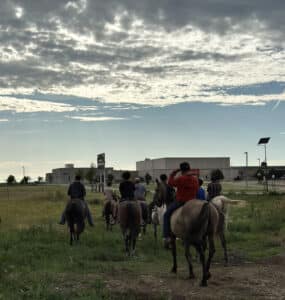
 In Lakota and Dakota cultures, horses – sun’ka wakan, or “holy/mysterious dog” – are sacred relatives. They are connected to the people through a spiritual bond and are believed to be gifts from the Wakíŋyaŋ (Thunder Beings). This deep relationship is at the heart of our current initiative: Equine and Culturally Grounded Treatment for Substance Use Disorder, funded by the Foundation for Opioid Response Efforts (FORE).
The project supports youth from the Crow Creek Sioux Tribe in South Dakota by acknowledging trauma and fostering reconciliation with the Horse Nation. We are actively customizing a Lakota Equine-Assisted Therapy (LEAT) model for Indigenous adolescents and young adults from age 18-25 at risk for or recovering from opioid use disorder.
Through immersive camps, participants build trust with horses and engage in traditional team-building activities such as teepee construction and learning the ceremonial game of stickball. These experiences strengthen cultural identity and emotional healing.
“Among American Indian populations, a connection to culture protects against addiction. Kids graduating high school tend to be at a little bit more at risk” explains Jordyn Gunville-Pourier, PhD, MPH, Miniconjou Lakota and an enrolled member of the Cheyenne River Sioux Tribe. Jordyn is a Senior Research Associate for the Great Plains. “Here in the Northern Plains, we are horse people. Historically, we would paint horses before they went into battle. The horse would protect the rider on their back as a shield. In this program, we are blending traditional horse ways with Western therapeutic approaches.
Some of our young adults may have no experience with horses. Starting with the basics, they will get to respect the horse as our four-legged relative, then learn how to take care of the horse. Brushing the horse is a form of therapy, talking with the horse, riding the horse—being one with the horse. The program will ground young people in traditional practices and mitigate risky behavior. When you’re young, it’s hard to figure out who you are and what you want. When you may be having a bad day, you get protection and power from riding. It’s made a difference not only with increasing their connection to culture and identity, but also in respect for our horse relatives. It’s a time for young people to connect with themselves. They are transformed into being present.”
By honoring the sacred bond between horses and Indigenous heritage, this initiative fosters resilience, restores cultural pride, and empowers our youth to reclaim wellness. This initiative represents a significant step towards healing and empowerment for our communities, paving the way for a brighter, healthier future.