About
Brief Study Summary
- The +Language is Medicine (+LiM) study is evaluating the effectiveness of a culturally rooted language nutrition intervention aimed at preventing or reducing developmental delays in Diné (Navajo) young children.
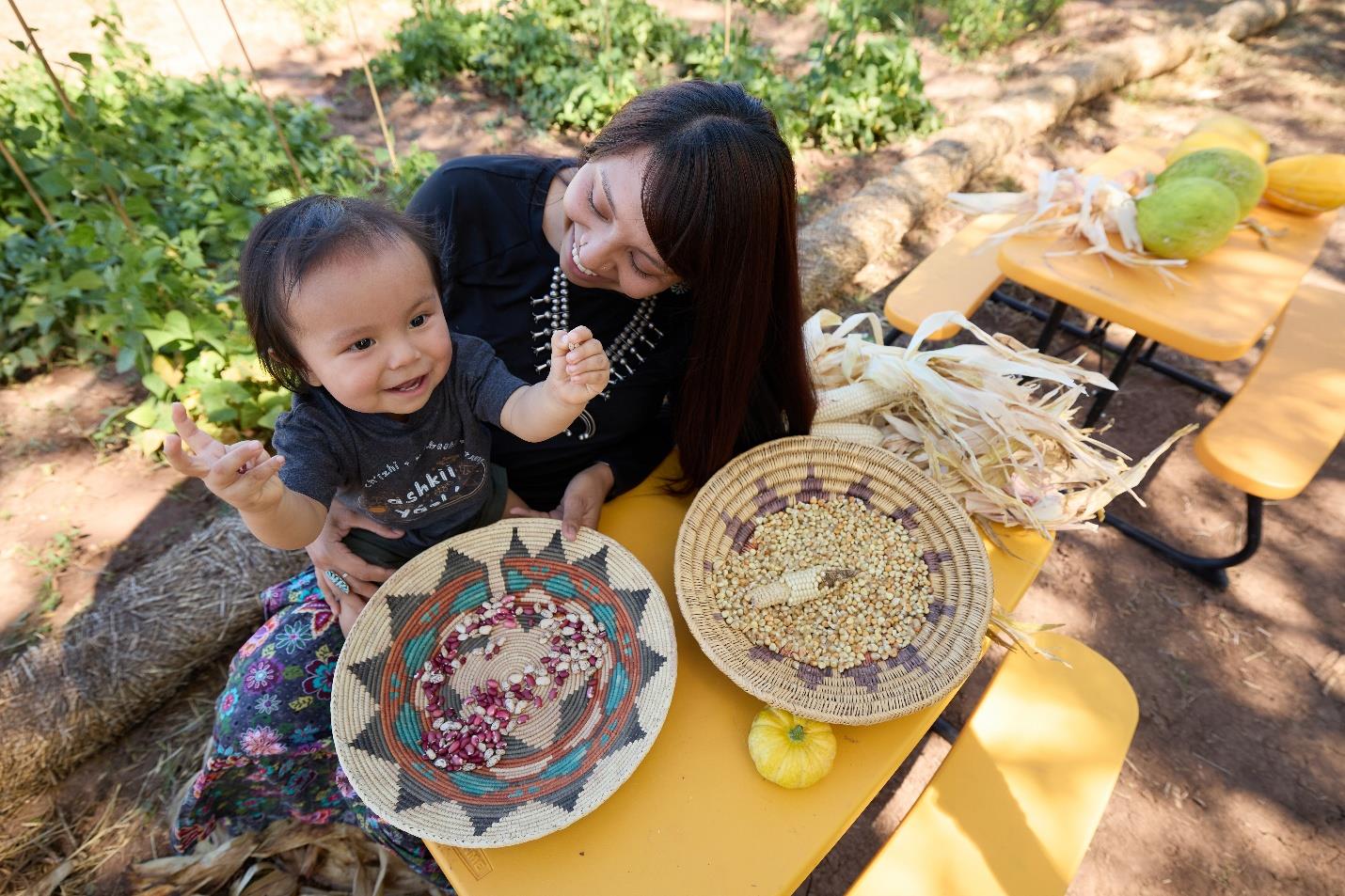
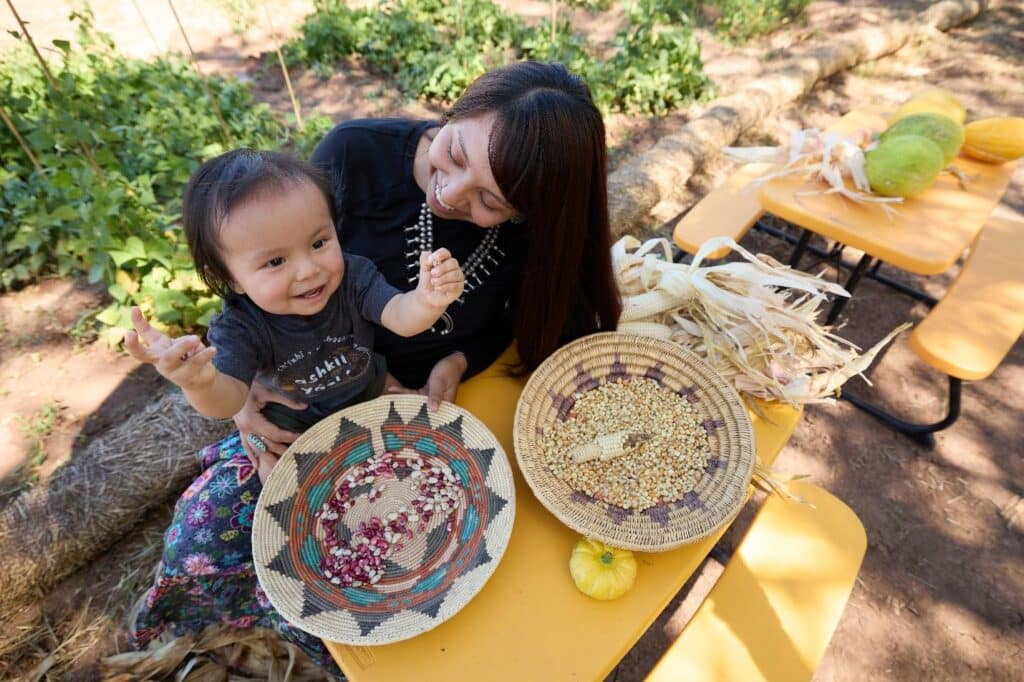
- The program includes “language nutrition” lessons, where families learn simple, evidence-based language facilitation strategies to interact with their children, supporting their child’s language development and social-emotional growth. Lessons include teaching, demonstration, and coaching shared during home visits, focusing on opportunities within everyday routines, exposure to traditional language, and cultural lifeways to foster development.
- These lessons are provided to primary caregivers by trained and supervised tribal home visitors.
- The study also aims to understand what resources and supports tribal home-visiting programs would need to successfully offer this program in their communities.
Study Background
Participation in everyday traditional and cultural lifeways, along with frequent intergenerational interaction and connection, are key ways that language, communication, and social-emotional development of young children have always been supported in Indigenous communities. However, for many families, these kinds of interactions and connections have been significantly disrupted through child removal, displacement of people from their lands, outlawing of traditional practices, and many other policies and practices that sought to weaken and eliminate Indigenous nations. The resulting modern-day conditions of everyday life have led to many Indigenous children experiencing developmental delays (DD).
Developmental Delay (DD) means a young child is falling behind in at least two areas, such as communication, problem-solving, social-emotional skills, motor skills, or self-help skills. DD can show up as early as infancy, and if not addressed, can affect a child’s school readiness, development, and even long-term health. DD is common among Native American infants and toddlers, which leads to many children being placed in special education later on.
With early screening and high-quality, culturally grounded support, many developmental delays can be improved or prevented in the first place, especially when caregivers are involved, and strategies are built into everyday cultural and home routines.
Indigenous children are almost three times more likely than other U.S. children to receive special education services. This often occurs after developmental challenges have gone underdetected and untreated. Unfortunately, in many states with large Native American communities, policies and requirements make it hard for families to access early-intervention services, even when children are referred.
To reduce these disparities, communities need earlier identification of DD and more opportunities for early support. Parent-focused programs, including Tribal Home Visiting (THV) programs, offer a promising way to reach families and provide help early, right in the home and community.
What Are We Doing?
- Conducting a randomized controlled trial to evaluate the effectiveness of the +Language is Medicine (+LiM) caregiver intervention in promoting:
- Expressive and receptive language
- Social-emotional development
- Caregiver responsiveness and language nutrition
- Study Sites: Eastern and Fort Defiance Agencies, Navajo Nation (New Mexico & Arizona)
- Participants: Toddlers 9-24 months + primary caregiver
- Study Dates: Summer 2026 – Summer 2029
How Will This Help Improve Health In Our Community
- Promoting early communication and developmental health among Indigenous children through community-driven, culturally grounded research
- Provide tribal home visitors with training to utilize evidence-based strategies for supporting caregiver-child interactions, while honoring Indigenous caregiving practices
PI/Program Coordinator Contact Information:
- Joshuaa Allison-Burbank, jalliso8@jhu.edu
- Elizabeth Kushman, ekushman@jhu.edu
- Lisa Martin, labram11@jhu.edu
- Jessica Meese, jmeese1@jh.edu
Publications
- Billey T, Kushman E, Meese J, Martin L, Jim L, Austin-Garrison MA and Allison-Burbank JD (2024) Development of a culturally enhanced caregiver-facilitatedlanguage nutrition intervention “+Language is Medicine” to address developmental delay in Diné (Navajo) toddlers. Front. Public Health 12:1376742. doi: 10.3389/fpubh.2024.1376742
Funding
- National Institute on Minority Health and Health Disparities (NIMHD)